Senior Director and Philippine Site Lead John Nicholls delivers the welcome remarks, focusing on the company’s goals and thanking the leadership team for gracing the event.
Digital payments leader to hire 1,000 more employees by the end of 2020
On the heels of announcing its office opening earlier this year, PayPal, a global leader in online payment solutions, officially inaugurated its operations site today in Alabang, Metro Manila – the company’s largest and first consolidated operations site in the country.
PayPal has now hired over 700 people for this new office, with the intention of enlisting 1,000 more employees by the end of 2020. The company will look to fill key roles in customer support, voice and non-voice processes, and risk management to cater to English-speaking customers worldwide. Initially, the company aimed for 1,000 hires through 2021, but with growing needs for key business functions and a large pool of available local talent, this target has since been increased.
The company’s decision to setup its global operations center in Alabang reinforces the country’s reputation as a hotbed for talent. “Filipinos are renowned not only for their outstanding command of the English language, but also for their customer service expertise, as well as their resourcefulness, hard work, and openness to new experiences. At PayPal, we embrace passion and diversity as part of our culture, and Filipino talents make for the perfect fit when it comes to the values we strive for as a global company,” said John Nicholls, the Country Lead and Senior Director of PayPal Global Customer Services.
With more than 286 million active PayPal account holders, and availability in over 200 markets, supporting customers around the world will be no easy task. All prospective employees in this new site can expect to receive robust product and cultural training that will equip them with the necessary knowledge and skills to better understand PayPal customers, as well as the intricacies of the many international markets they will serve.
An office designed for millennials
In 2020, it is estimated that at least half of the global workforce will come from the millennial generation, those who are now in their 20s and 30s.1 In the Philippines, millennials make up a significant part of the country’s total population and its labor force—with 1/2 of the total population aged 15-34, making up 43.9 percent of the labor force.2 This means that millennials will play a pivotal role in building a future for organizations, both foreign and local.
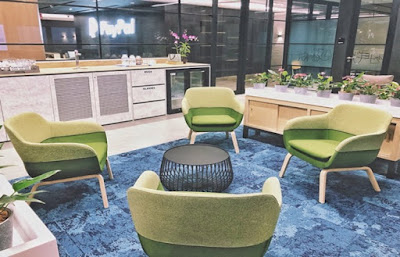
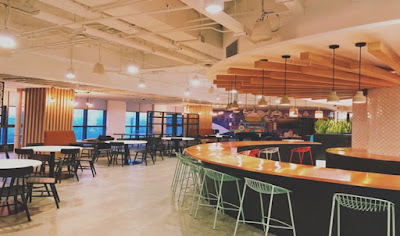
As an organization, PayPal champions innovation, collaboration, inclusion, and wellness—which are themes that resonate with Filipinos, particularly millennials. This is in full display at the company’s office in Alabang.
Apart from rest areas, a karaoke room, and a games area, the new office sports a modern cafeteria serving organic food that easily converts into a function zone complete with built-in LED screens and state-of-the-art sound system for events. To encourage teamwork and connectivity among employees, the spacious site also features open collaboration zones and WiFi on all floors.
“Our facilities are meant to embody PayPal’s work-culture philosophy which prizes innovation, collaboration, inclusion, and wellness. By nurturing these values in our office spaces, we provide our teams with the very best in coaching, mentorship and leadership, so they grow personally and professionally in their careers,” Nicholls explained.
As PayPal pursues its vision of democratizing financial services, it is looking to recruit more talent for a wide range of customer support roles. To find out more about these opportunities, visit www.paypal.com/jobs.
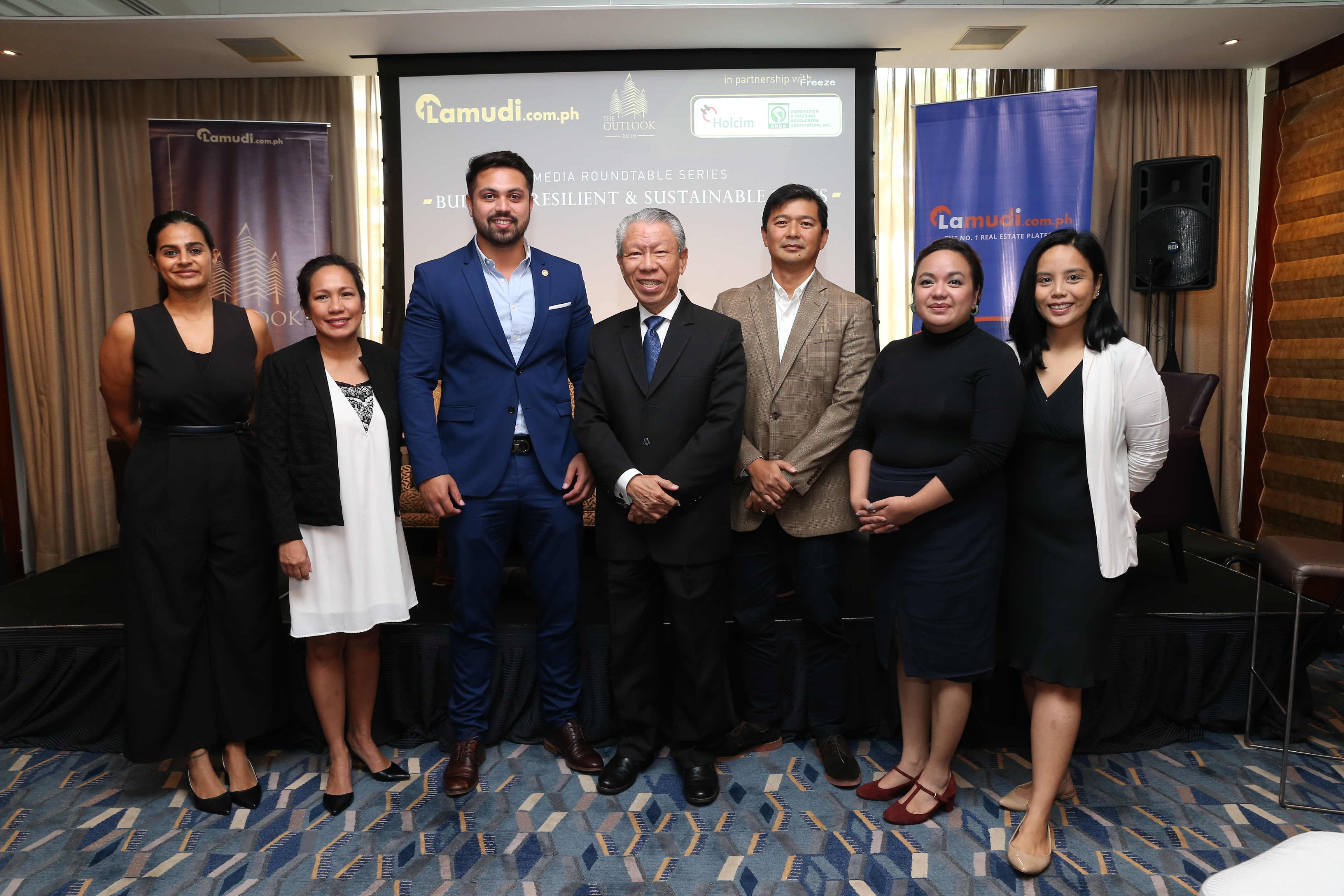
Climate change is a global issue. It is one that is pushing the Philippines to act upon its weak spots and harness its strengths. “It’s inevitable,” Lamudi CEO Bhavna Suresh says at the media roundtable held last September 27 in partnership with Holcim Philippines and Subdivision and Housing Developers Association (SHDA). Though the country may be facing a dire situation, there is plenty to be done in response to climate change, from big, industrial efforts to small, household changes.
Lamudi reinforced their support for building resilient and sustainable cities with the first panel discussion, Sustainability Efforts for the Philippines of NGOs and Private Organizations. NGOs, private organizations, and green developers were represented in the discussion, which tackled the roadblocks to green development in the Philippines and determined the efforts already in place to steer the country into a greener future.
Highlighting Resilience
“Most of our coastal municipalities want to be cities eventually. How do we push them towards not just sustainability but also push them to also look at measures that will make them resilient as well?” Atty. Angela Ibay, Head of the Climate and Energy Program of the World Wide Fund for Nature, posed an important question at the roundtable, steering right into the thick of the important topic of sustainability and climate change.
Angela Ibay, Head, Climate and Energy Program of the World Wide Fund for Nature
In a country that is dotted with high-rise mixed-use buildings and humble coastal homes, the effort to save the environment is tightly coupled with the measures developers can take to safeguard the value of their legacy. One solution, something as simple as planting trees, encourages the growth of foliage and relieves some of the urban heat island effect our cities are experiencing right now. However, it is not enough.
Wesley Caballa, Senior Manager for Sustainability of Costa Del Hamilo Inc.
“It’s not a question anymore of whether you can control climate change or not. It’s about adapting to the effects of climate change. It’s here. We are experiencing it now,” says Wesley Caballa, Senior Manager for Sustainability of Costa Del Hamilo Inc. According to Caballa, Hamilo is actively pursuing efforts to protect mangrove forests to do their part as a company.
Hamilo is one of many companies that have started making changes in keeping with a more climate-conscious business ethos. Climate change has not spared the Philippines with its onslaught, and with lives at stake, developers cannot sit around and wait.
Justine Santos-Sugay, Director for Resource Development and Communications of Habitat for Humanity
“We are already in an area of the world that is highly, highly susceptible to all these natural disasters, and climate change made us more vulnerable to that,” adds Justine Santos-Sugay, Director for Resource Development and Communications of Habitat for Humanity.
Addressing Roadblocks to Sustainability
The Philippines has not been remiss when it comes to sustainable efforts. One of the problems developers and real estate experts face, however, is misinformation or lack of dissemination at the grassroots.
“When you ask a common fisherman, ‘What do you know about climate change?’ Sometimes they say it’s synonymous to disaster without knowing why,” adds Caballa. “It’s really important for them to know what is wrong, what climate change is all about.” Santos-Sugay weighs in: “When you think about it, when you look at the issue of climate change, climate change seems to exaggerate or re-highlight a lot of the already pre-existing social themes.”
Ferdz dela Cruz, Former Chief Executive Officer of Manila Water Company, Inc.
One issue all Filipinos will relate to, especially in the Philippine capital, is the water shortage. Despite the typhoons that visit the country and leave damage in low-lying areas, there is water shortage because the rainfall missed the dams that are meant to supply water to the majority of the city. Ferdz dela Cruz, former Chief Executive Officer of Manila Water Company, Inc., emphasizes the urgency of the matter: “It’s up to us to make hard choices for us to be resilient. There are no easy choices at this point. For us to make that, we need to have a constructive dialog and without the misinformation.”
Dela Cruz also mentions the disparity in the supply and demand for water supply. According to him, “There are two issues on water–there’s the supply side and there’s the demand side. On the supply side, there is a roadmap of what needs to be done, but there are delays in the execution of the roadmap. There’s always opposition to a big water project.”
Long-term solutions to water shortage and climate change are further hampered by the lack of initiative at the individual level. According to Dela Cruz, people forget about the problem once they have water, but it quickly resurfaces when another water shortage is felt.
Sustainability in the Commercial and Industrial Sectors
Much of the effort real estate developers have put into sustainability can be seen in the commercial buildings they have strategically positioned in key cities. Jaime “JJ” Fernandez, Strategic Management Consultant of Menarco Development Corporation, mentions the savings Menarco Tower is able to pass on to its tenants through its sustainable design. According to Fernandez, “There is an estimate that the tenant will save about 20% in terms of energy consumption because the way the building is built is very efficient.”
JJ Fernandez, Strategic Management Consultant of Menarco Development Corporation
Fernandez also highlights the human aspect of thinking sustainable. “Prospective tenants would rather pay a little bit more rent” when they know the building will take care of their employees.
This, paired with Dela Cruz’s observation that people will be more responsible if the problem pinches their bill, makes the case for green developments: rather than lose money in inefficient designs, developers, tenants, and residents can save by prioritizing sustainability.
James Buskowitz, Chief Executive Officer of Buskowitz Group
The Philippines, which receives ample sunlight because of its equatorial location, can do more to utilize solar energy, one of the most efficient ways to be sustainable. James Buskowitz, Chief Executive Officer of Buskowitz Group, explains that projects harvesting solar energy come in levels: “Residential scale has always been the goal, but not in the beginning. Typically, when a country starts developing solar projects, it always starts with utility, then it goes to commercial- industrial rooftops, then it goes residential.”
“If we combine all the roofs in the entire Metro Manila, we would have enough solar energy to power the entire Philippines,” Buskowitz shares.
Trickling to the Residential Developments
“What color is your roof?”
A simple question sparked discussion in the roundtable’s second panel discussion, Design and Construction Trends in Real Estate to Build Sustainable and Resilient Cities in the Philippines. It is not a pointless question either, as the simple selection of a white roof can already help a household save energy.
“A safe home, a resilient city, a safe community is at the heart of what we have to address to adapt to the changes in the climate,”mentions Santos-Sugay.
To add, Lamudi’s CEO says climate change is not an isolated problem: “All of these inequalities that exist in the world today are getting heightened because of global warming.
Ar. Amado de Jesus, Vice Chairman of the Philippine Green Building Initiative
” We are not at a standstill when it comes to sustainable solutions, thankfully. Dela Cruz says,“The supply solutions will come many years from now, but everyone could start doing something on the demand side.”
One of the solutions proposed is a mirror of what other countries have already implemented: water tariffs. According to dela Cruz, “In other countries, what they’ve done quite successfully during periods of water shortage is to actually adjust the price of water–double or triple–during hot summer months basically to curtail the usage.”
Though this price adjustment has been discussed but not yet explored, companies such as Hamilo Coast have already implemented their own guidelines to conserve water and safeguard the environment from climate change. Hamilo Coast, which aims to be a “microcosm of what could be done,” practices a “top-down approach” on implementing sustainable policies. “The only way that we will see individuals actually follow the rules is if you put a system of checks, balances, and penalties.”
To get to the finish line, where a more climate-resilient Philippines awaits, each individual has to make impactful changes, but at the forefront are the bigger organizations that can influence those in their respective industries as well.
With miscommunication proving to be a big roadblock, the discussion needs to be sustained. This is one of the reasons for the creation of the roundtable, as Architect. Amado de Jesus, Vice Chairman of the Philippine Green Building Initiative, mentions, “If you have a bigger role, that’s a bigger responsibility.”
“Lamudi is a giant brand. With all the buildings that are together, the organizations that you have a big influence on, you can create a big impact,” says de Jesus.
It is not a cover of a magazine or a poster for an upcoming movie. But fans and social media followers of Maine Mendoza will truly be surprised and intrigued on what the young actress is up to when they see a screengrab of her latest video for Vivo.
The image, a silhouette of Maine teasing with what appears to be Vivo’s latest flagship smartphone, the Vivo V17 Pro, has many of her adoring fans already speculating when the new handset would be launched in the country.
Aside from the screengrab, a new video which will soon be up on Vivo’s Facebook page, will also feature the celebrity, garbed in highly-fashionable dresses, completing wacky fan-tweeted 17-second challenges such as eating polvoron while reciting the alphabet, or stuffing marshmallows in her mouth.
Prior to teasing about the V17 Pro, Maine was introduced as Vivo’s brand ambassador and endorser in May following the launch of the Vivo V15 Pro and Blossom Pink special edition smartphones.
Screengrab shows a silhouette of Maine teasing with the Vivo V17 Pro.


 Climate change is a global issue. It is one that is pushing the Philippines to act upon its weak spots and harness its strengths. “It’s inevitable,” Lamudi CEO Bhavna Suresh says at the media roundtable held last September 27 in partnership with Holcim Philippines and Subdivision and Housing Developers Association (SHDA). Though the country may be facing a dire situation, there is plenty to be done in response to climate change, from big, industrial efforts to small, household changes.